







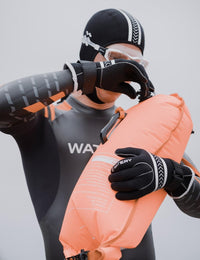









Let's be honest: from the outside, it looks crazy. Why on earth would anyone leave their warm duvet on a cold Sunday morning to jump into an icy harbor or frozen lake?
If you ask us at Watery - or the thousands of Danes who have already taken the plunge - the answer is simple: You do it for the thrill. That feeling of absolute presence when the cold water hits your skin, followed by a warmth that spreads throughout your body.
Many consider winter swimming an extreme sport, but in reality, anyone can participate if approached correctly.
We have helped countless beginners get started, and we know that the difference between a "cold and unpleasant experience" and an "euphoric victory" often lies in the preparation and the right gear.
Here are our best tips for getting started with winter swimming safely.
Why is winter swimming good for you?
When you immerse your body in the icy water, you experience what we call a "cold shock." It sounds intense, but it's here that the effect occurs. Your brain rapidly sends neurotransmitters throughout your body to handle the extreme situation.
You will often experience a release of endorphins, dopamine, and serotonin. These are the body's natural "happiness medicines," which is exactly why you often see winter swimmers laughing loudly or feeling a deep calm when they come out of the water.
Physiologically, what's happening is that your blood vessels constrict to keep warmth around the vital organs. This causes your heart to beat faster and blood pressure to rise temporarily. According to Hjerteforeningen, that's precisely why it's important to gradually acclimate your body to the cold to avoid overloading your system.
Additionally, research suggests that regular winter swimming activates brown fat. Unlike regular white fat, brown fat actively burns energy to generate internal heat. Many people also find they're less prone to winter colds, as the body becomes more adept at handling stressors.
5 Important Tips for Safe Winter Swimming
Even though we love the cold thrill, you must respect the water. The cold can cause your body to react differently than it does during summer beach trips, so the good experience is primarily about safety.
We always recommend that you follow these 5 tips before you dive in:
-
Never go alone - use the buddy system: Sharing the experience is fun, but safety is a must when you jump into the cold water. Especially as a beginner.
The cold shock can rarely make you dizzy or cause muscle cramps, so it's crucial that someone is watching from the edge. Agree in advance, for example: "I'll watch you while you’re in, and vice versa".
-
Control your breathing to avoid hyperventilation: When the icy water hits your skin, your body reflexively gasps. It's a natural reaction, but it can lead to hyperventilation if you don't take control. Before you enter the cold water, take some deep, calm breaths deep into your stomach. Force your shoulders down and maintain a calm breathing pattern as you lower yourself into the water. This signals your nervous system that everything is fine, reducing the risk of panic.
-
Enter slowly and keep your head above water: Though it may be tempting to "get it over with" with a quick jump, we recommend that you always use the ladder and enter slowly.
If you jump in, you’ll experience a harsher cold shock, and you risk hitting your head on the bottom or ice flows. As a rule, keep your head above water. You lose up to 70% of body heat through your head, and "brain freeze" can happen quickly, causing disorientation. If you absolutely must go under, use a neoprene hood.
Watery neoprene hood - Flex - Black
€24€334.0/5
Based on 7 reviews
-
Beware of "The After-drop": Many beginners are surprised to find they actually feel coldest after their dip. This phenomenon is called "The After-drop". When you come out, the cold blood from your skin and limbs mixes with the warm blood near your organs, causing your body temperature to drop further for 10-15 minutes after emerging. Thus, it's important to put on dry, warm clothes quickly. Preferably a hat and wool socks. And enjoy something warm to drink to heat your body from the inside.
-
Check conditions thoroughly before changing: Winter weather can turn the pier into an ice rink in just a few hours. Take two minutes to check if the ladder is ice-free and whether there’s a current in the water. Knowing exactly where to place your feet when getting out quickly provides immense assurance.
If everything is extremely slippery, consider some stylish neoprene shoes or socks for better grip.


Best Equipment for Winter Swimming
Many mistakenly believe winter swimming is about enduring as much as possible and freezing everywhere. But the secret to a good experience is actually protecting the body's most exposed areas - namely, the hands and feet.
When you cover your extremities with neoprene, you eliminate the stabbing pain from these areas, allowing you to relax and let the rest of your body enjoy the cold sensation without losing feeling in your toes and fingers. It's not about avoiding the cold, but about managing it.
Here are the three items that make the biggest difference:
-
Neoprene shoes and socks:
Your feet are vulnerable to cold and sharp objects. Neoprene shoes or socks are your most important safety measure as they protect against sharp shells and stones on the seabed that you cannot see in the water.
The non-slip sole also ensures stable footing on slippery piers, while the neoprene keeps your toes warm.
See our selection of neoprene shoes here.
-
Neoprene gloves:
Your hands quickly become cold and stiff. With neoprene gloves, you protect vulnerable joints, maintaining your dexterity. This makes it much easier to get dressed again and allows you to enjoy your time in the water.
See our selection of neoprene gloves here.
-
Bath poncho and hat:
When you come out, the wind is your adversary. A hat stops major heat loss from your head while a bath poncho shields you from the breeze and serves as a mobile changing room.
See our selection of winter swimming equipment here.
| Equipment | Which problem does it solve? | Our advice |
| Neoprene shoes | Protects against sharp shells, provides grip on slippery piers, and warms your toes. | Choose a model with a solid rubber sole for maximum protection. |
| Neoprene gloves | Protects hands from the cold, maintaining finger mobility. | Put them on first, before heading out into the cold. |
| Bath poncho | Shields the body from the cold wind after the dip. | Choose a model with a hood and pockets for extra comfort. |
| Hat | Stops heat loss from the top of the head. | Always have an extra dry hat for the journey home. |


The discount code can be used by all new customers on all products on the website, including the products recommended here in the article. What are you waiting for? Get more out of your time in and on the water!

GET A DISCOUNT CODE WITH 10% OFF
When can it be called winter swimming?
When do you go from being a “regular swimmer” to a “winter swimmer”? Even though the name suggests it only takes place during the winter months, the definition is actually based on temperature.
A common rule of thumb is that it’s considered winter swimming when the water temperature is below 10°C.
In Denmark, this means in practice that the season spans several seasons of the year — typically from October to May. So you don’t need to wait for snow and frost; as long as the water is below 10°C, you can officially call yourself a winter swimmer. 🎉
You don't need to stay in the water for several minutes to feel the benefits. For most people, 10–30 seconds is more than enough to trigger the beneficial signaling chemicals and get your circulation going. As a beginner, it's not about breaking records, but about feeling the rush and getting out before you become hypothermic. Yes, winter swimming increases your calorie burn. When your body is exposed to extreme cold, it has to work hard to maintain its core temperature, which requires energy. Activity in brown fat increases, boosting calorie burning—but think of it as a healthy addition to your lifestyle rather than a miracle cure. Research suggests that winter swimming 2–3 times a week provides the greatest health benefits, as your body becomes accustomed to handling the stress response. But even a single swim at the weekend can give you a mental boost and a sense of well-being. As a general rule, we recommend keeping your head above water, especially as a beginner. You lose a significant amount of your body heat through your head, and the icy water can cause "brain freeze" and disorientation. If you'd like to put your head under water, you should wear a neoprene hood to retain your body heat.How long should you stay in the water when winter swimming?
Do you burn calories by winter swimming?
How often should you go winter swimming for it to have an effect?
Is it okay to put your head under water?

Former elite swimmer and founder of Watery
Daniel has over 10 years of experience in the swimming industry and has been developing products for winter swimming for many years. He is the founder of Watery.no, where he combines his passion for swimming with deep expertise in equipment and guidance.
